
Pakistan have agreed to play India in the T20 World Cup match in Sri Lanka after diplomatic outreach and ICC-led talks ended the boycott standoff.

Uncertainty surrounds the planned second round of peace talks between the US and Iran in Islamabad, as both sides engage in brinkmanship. Despite Pakistan's security preparations, Iran has yet to confirm its attendance, citing a lack of seriousness from the US in pursuing diplomacy and violations of the ceasefire.

Iran has presented a multi-layered proposal to the US in an attempt to break the deadlock in peace talks, focusing on de-escalation and nuclear programme discussions.

An Iranian delegation, led by Foreign Minister Abbas Araghchi, is expected to arrive in Islamabad for the second round of peace talks with the US, according to Pakistani media reports. This follows a phone call between Deputy Prime Minister Ishaq Dar and Araghchi regarding the US-Iran ceasefire and Pakistan's diplomatic efforts.
US President Donald Trump on Monday confirmed that a high-level American negotiating team, including Vice President JD Vance, Jared Kushner, and Special Envoy Steve Witkoff, is en route to Pakistan to initiate critical negotiations with the Iranian leadership.

In a significant diplomatic manoeuvre aimed at de-escalating regional tensions, Iran has reportedly submitted a "new proposal" to the United States through Pakistani intermediaries.

US President Donald Trump has indefinitely extended the ceasefire with Iran at the request of Pakistan, aiming to allow Tehran's leadership time to form a unified proposal to end the seven-week war.

Russian President Vladimir Putin has offered his support to help bring peace to West Asia, praising the Iranian people for their resilience. This comes as Iran seeks to resolve the conflict with the US, following discussions with Pakistani and Omani leadership.

Pakistan's Foreign Office has refuted media reports suggesting that its efforts to facilitate peace talks between the US and Iran have stalled, calling the reports baseless and speculative.

The clock on the ceasefire is running out. But everyone's already whispering about round two, possibly as soon as this weekend.

A media report indicates the White House was directly involved in crafting a social media post by Pakistan's Prime Minister Shehbaz Sharif, requesting then-US President Donald Trump to extend the deadline on Iran.
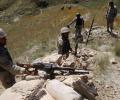
Pakistan has handed over evidence-based demands to mediators in Istanbul talks with the Afghan Taliban, aiming to end cross-border terrorism. The talks follow recent border clashes and aim to defuse tensions between the two sides.

China has called on Iran to reopen the Strait of Hormuz and expressed appreciation for Tehran's commitment not to develop nuclear weapons, a key demand of the US to end the conflict.

US Vice President J D Vance is expected to travel to Islamabad for peace talks with Iran to end the seven-week war, amid a fragile ceasefire and ongoing tensions.

Iran's foreign ministry spokesperson Esmaeil Baqaei on Sunday said that the recent meeting with US officials was the longest round of negotiations they have had in the past year.

Delegations from the US and Iran have arrived in Islamabad for talks aimed at resolving the conflict between the two nations, following a ceasefire brokered by Pakistan. The negotiations are being closely watched due to their potential impact on regional security and global diplomacy.

For India, much is at stake: Crucial energy supplies traversing the Strait of Hormuz, the fate of its 10 million citizens living and working in West Asia -- who send generous remittances home -- and its major trade links with the region.

The United States and Iran concluded the first phase of in-person talks in Islamabad, with both delegations exchanging written texts to formalise areas of understanding. The discussions, involving key representatives from both sides, are aimed at reducing tensions and exploring possibilities of a structured understanding.

The Ministry of External Affairs (MEA) has stated that India is closely monitoring developments in West Asia, addressing topics ranging from ceasefire efforts to maritime security and the safe return of Indian nationals. The MEA also addressed the UN Climate Change Conference and the delimitation bill.

Amidst the stalling of high-level peace talks between Tehran and Washington, Iran continues to endure severe digital isolation as the nationwide internet blackout reached its 44th day on Sunday.

Pakistan Cricket Board chairman Mohsin Naqvi on Sunday met his Bangladesh counterpart Aminul Islam and ICC deputy chair Imran Khwaja in Lahore, even as efforts to resolve the standoff over Pakistan's proposed boycott of the high stakes T20 World Cup match against India gather pace.

The question is whether the clocks allow enough time for two deeply mistrustful sides to get there, and whether the surface calm holds long enough for the paddling to produce something before the ceasefire ends on April 22, notes Prem Panicker in his must read blog on the Iran War.

US President Donald Trump repeated his claim at the World Economic Forum in Davos that he stopped the war between India and Pakistan, a claim India has consistently denied.

Iranian foreign ministry spokesperson Esmaeil Baghaei said that the country has held no "direct" talks with the United States as of now and added that it has received messages through some mediators regarding the US' desire for negotiations.

The opposition has been demanding a debate on Operation Sindoor -- the strike on terror sites in Pakistan by the Indian armed forces in response to the terrorist attack in Pahalgam on April 22.

Donald Trump claims his use of tariffs prevented a nuclear war between India and Pakistan, a claim India has repeatedly refuted.

The US President has previously made similar claims, stating that Sharif had credited him with saving millions of lives by helping end the conflict between the nuclear-armed neighbours.

Donald Trump is claiming he prevented a war between India and Pakistan, a statement that has been repeatedly made by the former US President despite denials from India.

Pakistan confirms that talks with the Afghan Taliban to address cross-border terrorism have failed, citing a lack of commitment from Kabul to control militancy. Pakistan accuses the Taliban of supporting anti-Pakistan terrorists and blames India for the failure of the talks.

Western Army Commander Lieutenant General Manoj Kumar Katiyar reports a sustained decline in militancy in Jammu and Kashmir, emphasizing the army's readiness to respond to any misadventures by Pakistan and its support for terrorist activities.
Pakistan and the Afghan Taliban have resumed peace talks in Istanbul, aiming to address cross-border terrorism and prevent further escalation. The talks follow recent clashes and a temporary ceasefire, with Pakistan demanding that Afghan soil not be used for terrorism.
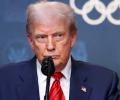
Each time a deadline almost runs out, President Trump hands out a new one.

Bangladesh Cricket Board president Amin ul Islam has arrived in Lahore ahead of a virtual meeting involving the PCB and ICC, amid efforts to resolve the standoff over Pakistan's proposed boycott of its T20 World Cup match against India.

The core issues to be settled -- access to Hormuz, Israel's aggression in Lebanon, the question of Iran's nuclear programme, sanctions relief and compensation -- are thorny enough to require weeks of patient negotiation. The most likely outcome of the opening sessions is that both sides take the measure of each other, establish what is and is not negotiable, and return home without having broken anything. That would count as progress.
Pakistan and Afghanistan have agreed to an immediate ceasefire and setting up of 'mechanisms' to ensure lasting peace after days of violent clashes along the border that left several soldiers, civilians, and terrorists dead on both sides, officials said on Sunday.

The LPG squeeze on India's restaurant sector is the quotidian face of a deeper crisis.

Trump may strike. He may announce productive talks and extend again. He may do both at the same time. Iran will not open the Strait on someone else's terms, so no matter what happens, that problem will remain unsolved. And the IRGC will still be collecting its $2 million toll from every ship bold enough to ask permission to pass.

This weekend, Donald Trump has begun to say the quiet part out loud -- that he wants to take control of Iran's oil, a formulation more in line with his robber-baron style of international relations.

The Congress on Sunday demanded answers from the government on whether it has accepted third-party mediation on Kashmir after the United States made announcements on behalf of India and Pakistan, and slammed attempts to 'internationalise' the issue and 'hyphenate' the two countries.

'Was the five-day pause ever meant to hold, or was it simply another instrument of signaling, of positioning, of buying time in a war where even the pauses are tactical?' asks Prem Panicker in his must read daily blog on the Gulf War.
